FABS AI is being developed as a wellness and medical research platform. Medical research defines the project's long-term direction.
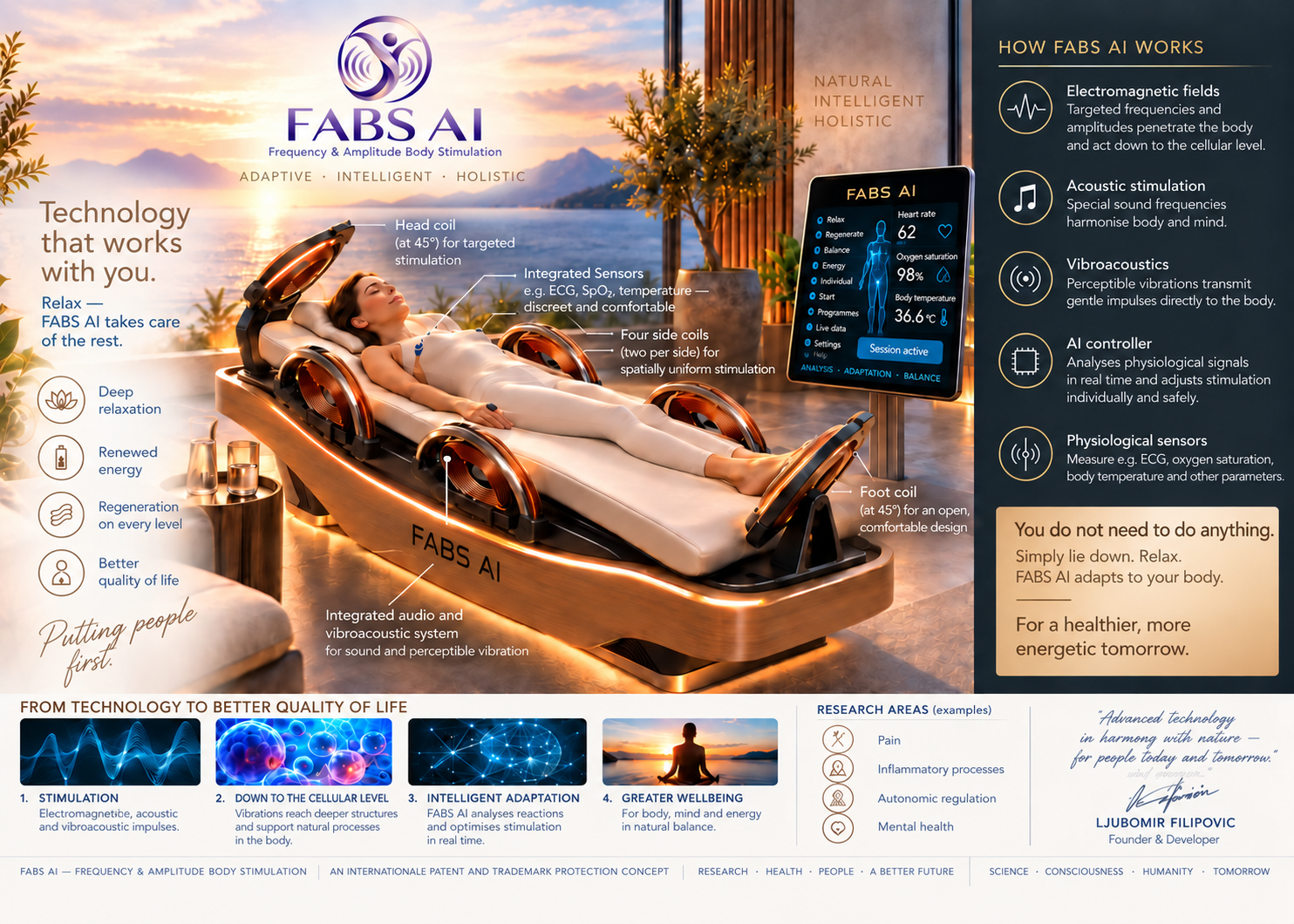
Imagine a treatment couch combining audible sound, physical vibration and electromagnetic impulses. In the proposed concept, AI relates sensor readings to the applied stimulation and the body's responses. The aim is to capture responses in real time, analyse them continuously and adapt the application within predefined safety limits.
The central question is how each individual responds. Sensors and AI are intended to investigate these responses in real time and inform personalised development towards medically demonstrable therapeutic effects. This is a research goal that requires scientific verification.
Investigating new approaches systematically and establishing scientific evidence.
03
Long-term perspective
Patent protection and medical approval are long-term development goals.
FABS AI – putting people first
Functional and therapeutic statements within the image are concept content, not confirmed evidence of effectiveness.
What is envisaged for a session?
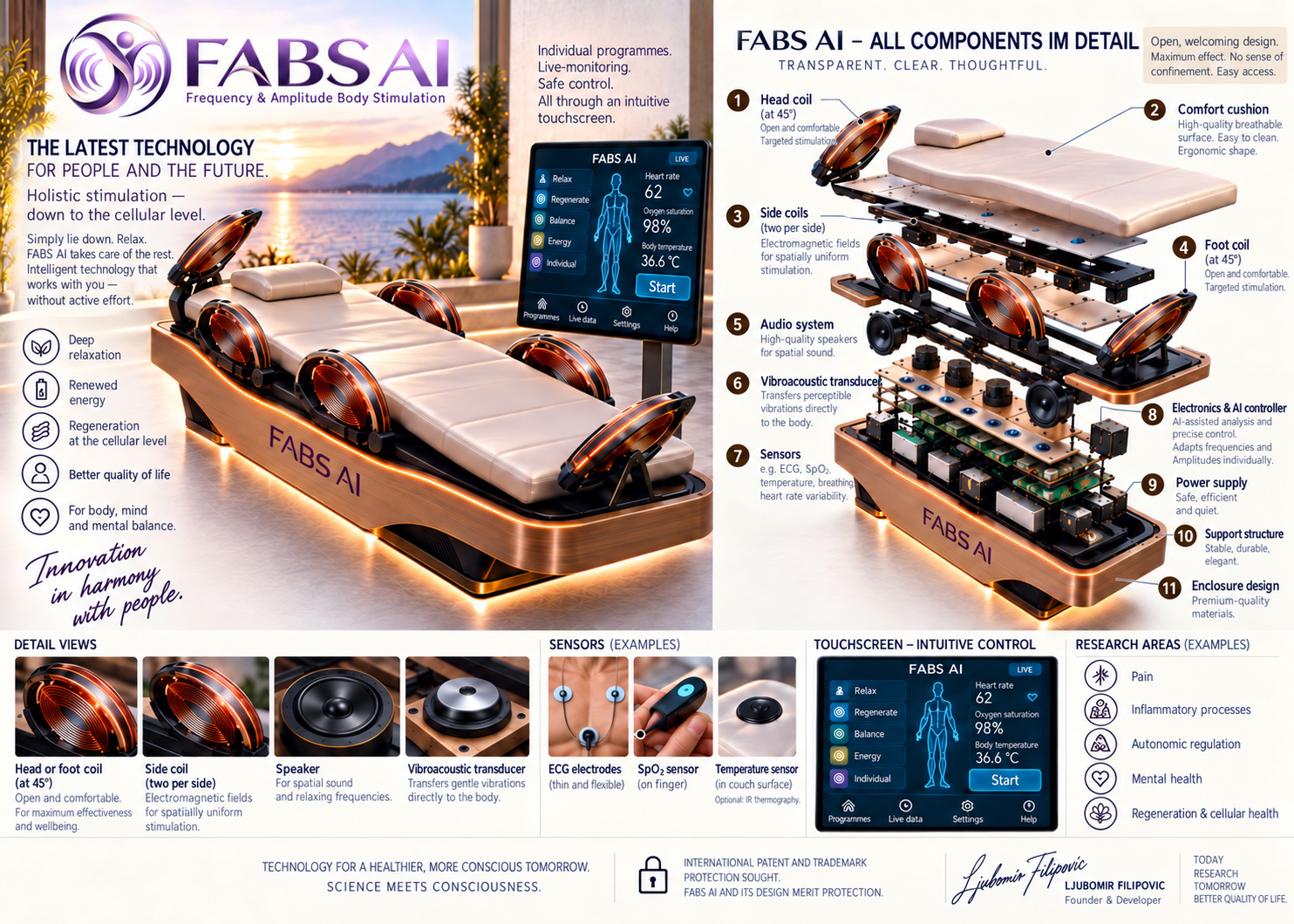
The open couch has a padded surface with components around it and in its base. Trained staff select programmes and operate a screen. The proposed AI analyses body signals in real time and adapts the application to the recorded responses within predefined programme limits. It must never independently alter vital parameters. Permitted procedures and analysis limits form a binding safety framework. Trained staff can stop the programme at any time; a person remains the final authority. The reliability and accuracy of this supervised adaptation require further development and research. The images depict a possible future application, not an available production model.
The effect of sound on matter
Hear sound, feel vibration
The ear converts sound into electrical signals processed by the brain. Like smell, sound reaches us without conscious control of every processing step. Audible tones and felt vibrations follow different sensory pathways; perception depends on the individual and context. A therapeutic effect does not follow automatically. Research does show benefits for certain music therapy applications, for example alongside depression treatment. These findings concern the studied applications, not every sound frequency.
Speakers are intended to reproduce sound within predefined frequency ranges, chosen according to the research question, programme and individual needs. Claims about treating specific conditions require further medical assessment. A system within the couch also delivers mechanical vibrations as perceptible impulses. Combining sound with physical vibration is known as vibroacoustics . Another area of research is bone conduction: vibrations travel through the skull or body and are perceived differently from airborne sound. FABS AI brings these approaches together so their interaction can be studied.
What do the coils do?
The circular elements in the designs contain coils that generate electromagnetic fields, providing another intended form of stimulation alongside sound and mechanical vibration. Frequency and amplitudedescribe how often an oscillation repeats and how strong it is. Part of this work is basic research; the project also draws on other researchers' findings with medical evidence for specific relationships. Suitable settings for particular applications remain questions for development and research.
OM EEG
Video provided from project material.
Understanding the body's signals
Depending on equipment, sensors record heart rate and ECG, body temperature, breathing rate and volume, and, when needed, brain activity (EEG), skin conductance as an indicator of physiological stress, and symptom-specific measurements. Reports of aggression or tension may add context; these are not presented as directly measured vital parameters. An optional infrared whole-body scanner maps surface temperatures. Research can explore possible signs of superficial inflammation, but medical assessment is needed to determine whether a finding relates to inflammation or infection. Sensors help compare changes during a session; a changed reading alone does not prove improved health.
Systematically collecting and analysing data from different people can build a growing knowledge base. Scientifically assessed data that can lawfully be used may contribute to company value. The aim is to identify robust relationships so AI can better support applications and, where medically validated, treatments within defined limits.
What role does artificial intelligence play?
The planned AI will analyse measurements in real time and investigate relationships between an application and bodily responses. Simultaneous readings may exceed what people can immediately process. AI is intended to help clinicians organise this information and identify relevant patterns, eventually supporting more individual settings. Reliable adaptation remains a development goal requiring transparent assessment. AI provides additional information and support for human-led diagnosis and treatment; clinical responsibility stays with the treating professionals.
What does this mean for interested users?
FABS AI initially focuses on wellness and research into the interaction of its proposed functions and individual responses. This does not currently establish treatment of specific diseases or proven health benefits. The complex, costly approval process for worldwide medical use remains a long-term perspective.
Concept visualisation of the couch. Components and labels represent a design, not a confirmed production specification or evidence of effectiveness.
03 / NOMAD AI case
Building on practical experience
Take possibilities with you. Create connections.
The NOMAD AI case combines portable equipment with digital capabilities. Its development includes sensing, AI and AR – adding digital information to the real environment.
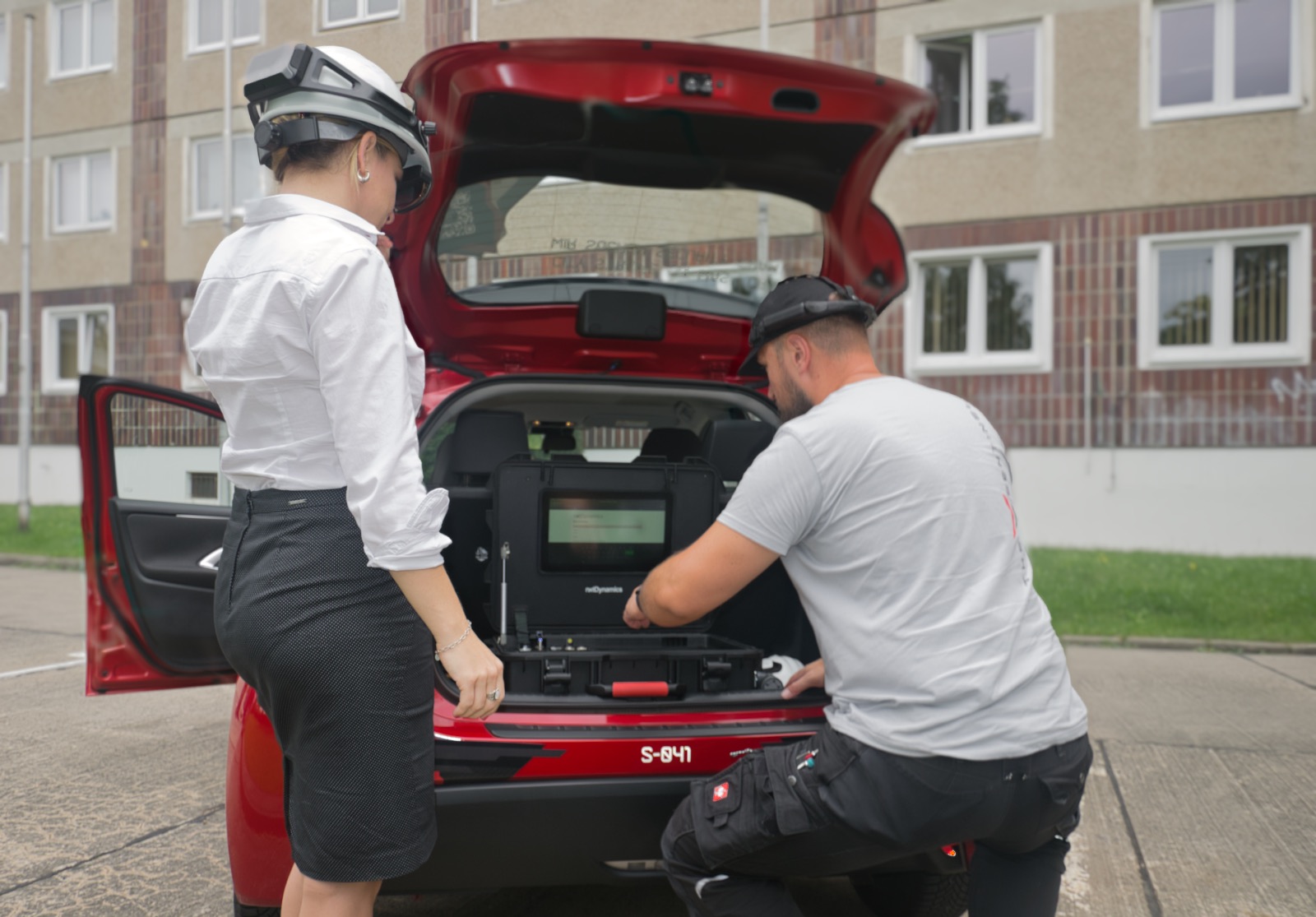
Development in real environmentsEarlier development and testing · Case and AR equipment at a security company's vehicle. Used for AI-assisted automated staff registration and sensing in site security. The basic version supports up to 128 body cameras and captures personnel's vital parameters in hazardous security environments.
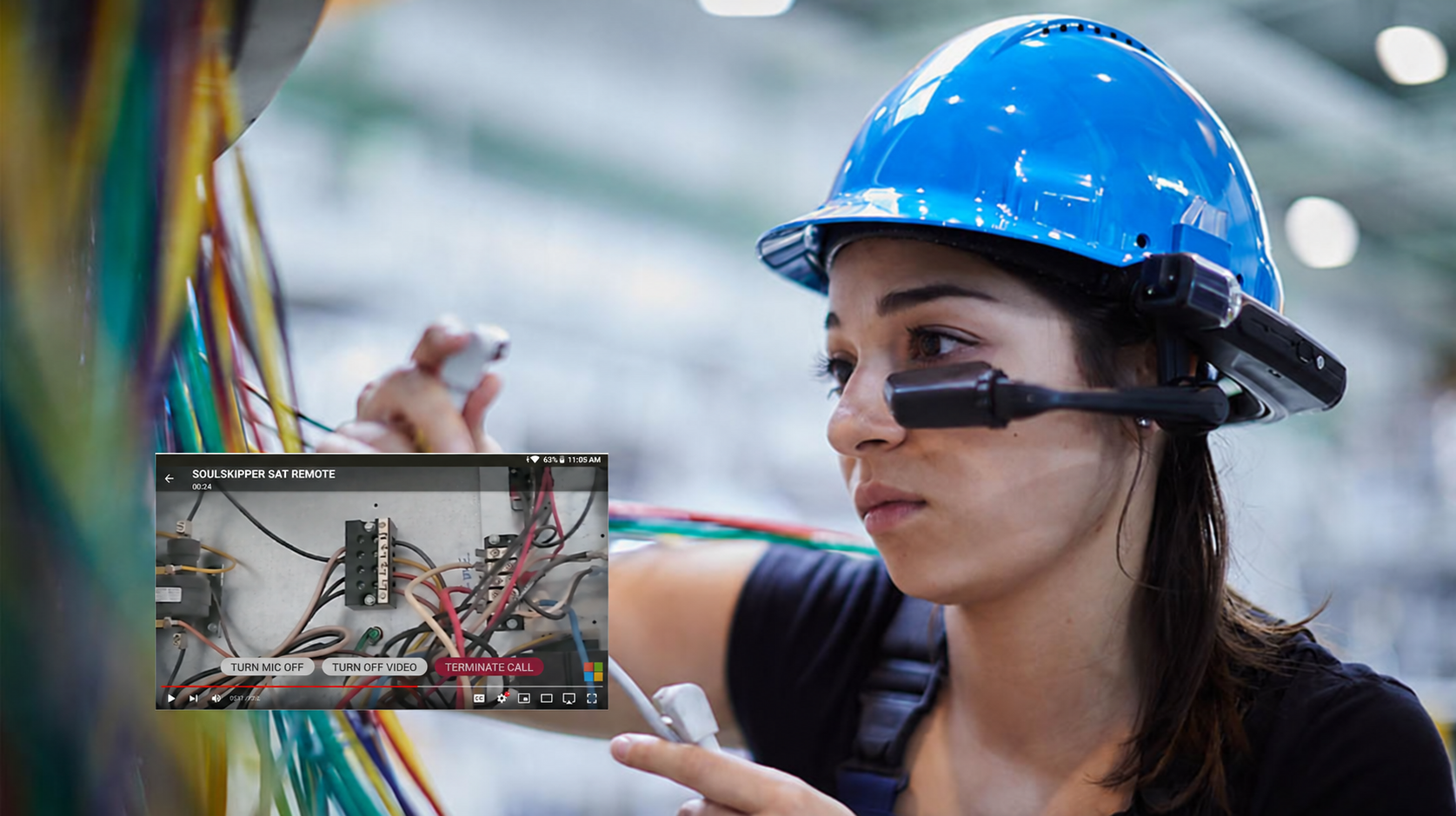
Remote supportThe smart glasses can translate up to four languages simultaneously, supporting collaboration across language barriers. During unplanned aircraft maintenance abroad, an appropriately authorised professional on site can work with remote specialists while the work is digitally documented. Similar uses include maintenance of power plants and other technical facilities.
Mobility
Technology on site
Mobile hardware provides the basis for applications at changing locations, including demanding conditions.
Connection
Remote support
Remote digital support is part of the case's development history.
Experience
Learning from tests
Earlier industrial and disaster-response tests form part of the development background.
Preparedness: three years of maintenance-free storage
High-quality materials and an in-house battery design allow three years of maintenance-free storage. NOMAD AI is also intended for municipalities and private users keeping equipment ready for future emergencies.
This refers to storage life, not operating time on one battery charge.
Special configuration for demanding environments
A rugged configuration is envisaged for particularly difficult conditions. This version operates from −30 °C to +70 °C and at altitudes up to 4,000 metres above sea level . It is designed to withstand vibration and splashes during mobile use in harsh environments.
The design was tested to military standard 810F. This does not constitute a claim of military certification.
These features apply to the special configuration, not every variant. Depending on the model, equipment may include a waterproof, antibacterial keyboard with medical approval under EN 60601-1-2.
For small municipalities and people without technical experience
NOMAD AI also serves small municipalities and private individuals who want to remain capable of acting in emergencies. Under stress, nobody should have to learn complex controls. Development therefore prioritises simple access and clear procedures.
The operating concept follows a one-button approach: a central start initiates the intended process. The system aims to automate technical steps and guide people through clear, self-explanatory instructions. Ease of use without training and under stress requires practical testing.
Automation should make communication and support more accessible. Medical decisions and professional responsibility remain with qualified personnel.
Technical design and power supply
The case includes rugged, vibration-resistant and splash-protected components. The touchscreen can be operated with gloves even in severe cold. Its chemically etched surface reduces reflections for daylight readability. An integrated battery controller allows connection to any DC source between 12 and 24 volts. Relevant component certification and testing references include CE, EN 55022, FCC Part 15 Subpart B Class A, DIN EN 61000-4-2 electrostatic discharge tests (±15 kV air and ±8 kV contact), DIN EN 61000-4-3 field immunity at 10 V/m, and EN 60601-1-2. Specific evidence applies to the equipment actually installed in each model.
A mobile communication platform for disasters
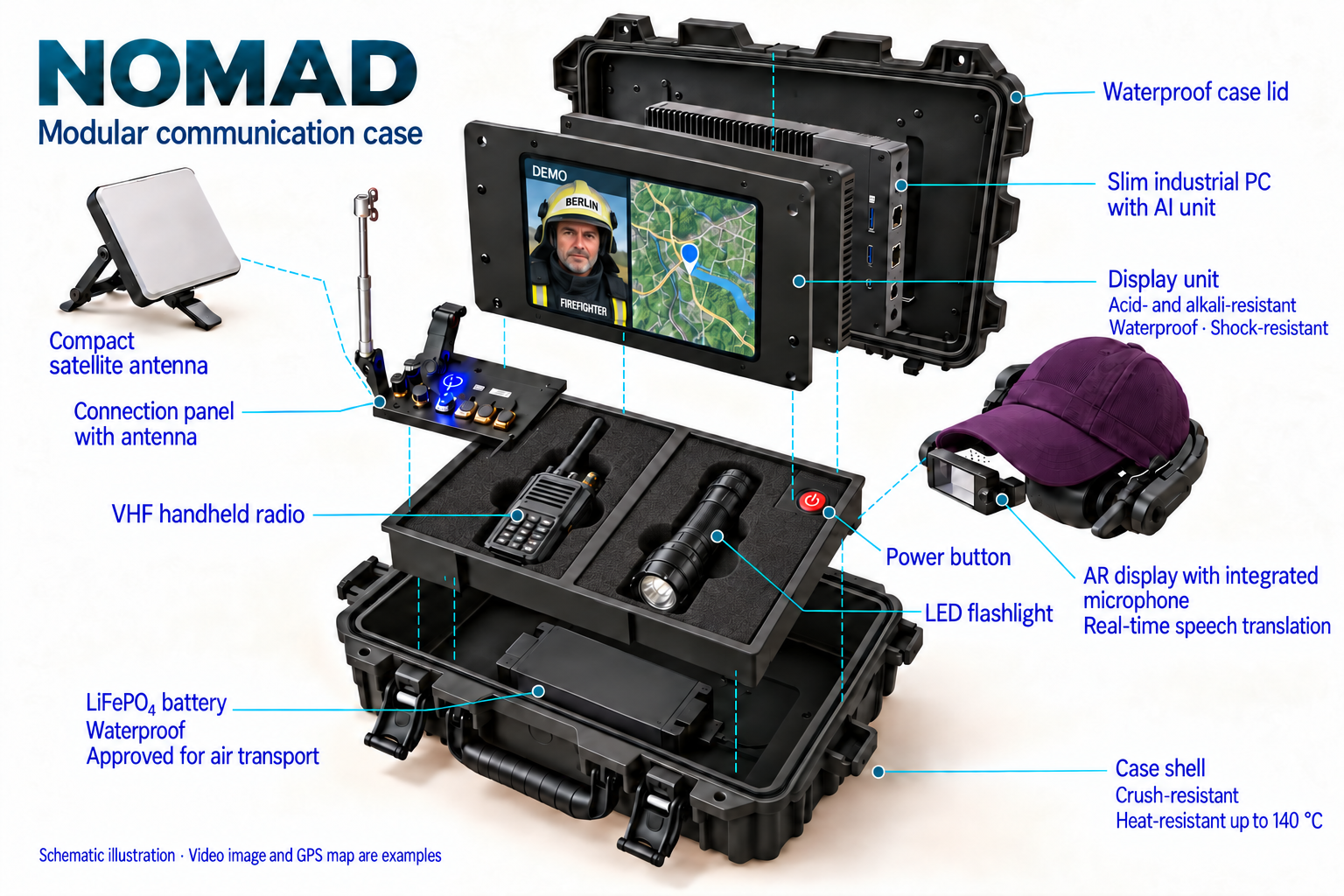
NOMAD AI – communication hubConcept visualisation · Equipment, screen content and specifications are illustrative, not evidence of verified performance or approval.
After floods, earthquakes or other disasters, responders must share information and coordinate under difficult conditions. NOMAD AI is intended to develop into a mobile communication platform, combining equipment in a portable system to connect teams on site with remote specialists and coordination centres.
Teams could exchange images, observations and available measurements with an operations centre. Connectivity depends on equipment, power and available communication routes. The case has also been tested with complete GSM and telephone network failure and loss of normal power. Radio or satellite links can still provide access to assistance, allowing municipalities and individuals to request help when conventional networks fail.
Medical support when no doctor is on site
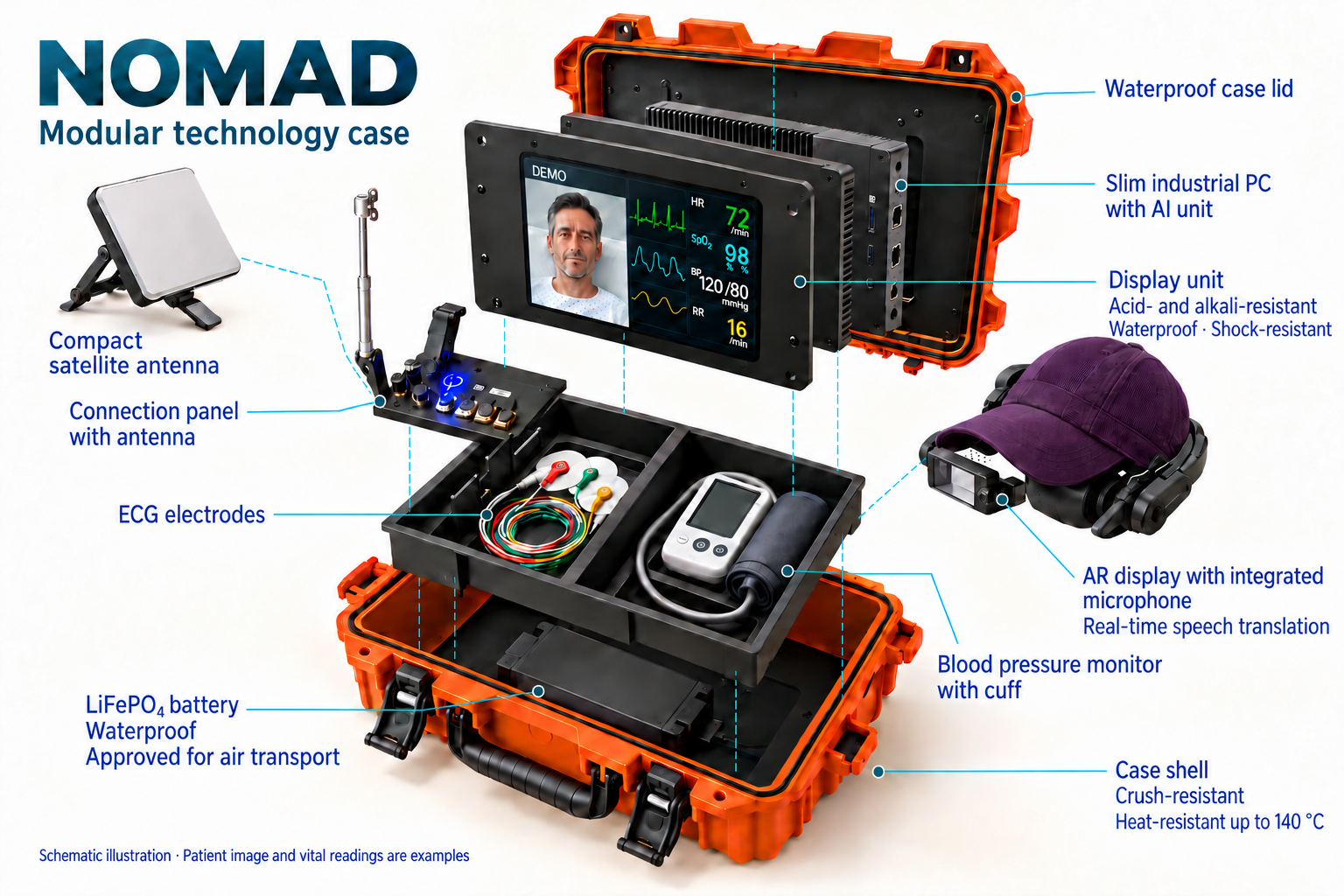
NOMAD AI – case for medical supportConcept visualisation · Equipment, screen content and specifications are illustrative, not evidence of verified performance or approval.
In war zones, crises and medically underserved regions of developing countries, doctors may be far away. NOMAD AI also aims to connect people on site with remote medical professionals. This form of support is called telemedicine .
Trained helpers could collect data using suitable connected devices and transmit it for a doctor's assessment. Cameras or smart glasses could share the on-site view. The aim is to support remote medical assessment and diagnosis. Appropriate equipment, tested procedures and reachable professionals are required; the case does not replace a doctor.
Communication across language barriers
Different languages can complicate conversations between people seeking help, local helpers and remote specialists. Translation support is therefore another development direction, helping describe symptoms, understand follow-up questions and exchange information.
Medical conversations require reliable understanding and confirmation of unclear information. Automatic translation can help, but reliability must be checked for the languages and conditions concerned.
One system, different conditions
The shared aim is to bring knowledge and support where needed. NOMAD AI combines mobile technology, communication and remote collaboration. Available functions depend on the specific equipment and development stage.
These scenarios describe intended development, not a promise of currently available emergency care or approved medical diagnostics. Historical photographs show earlier development and testing environments.
NOMAD AI case
Video provided from project material.
04 / Research & Development Background
Experience becomes a starting point.
From mobile applications to new research questions: experience with sensing, AI and connected systems links the projects. SOULSKIPPER builds distinct directions for FABS AI and the case on this foundation.
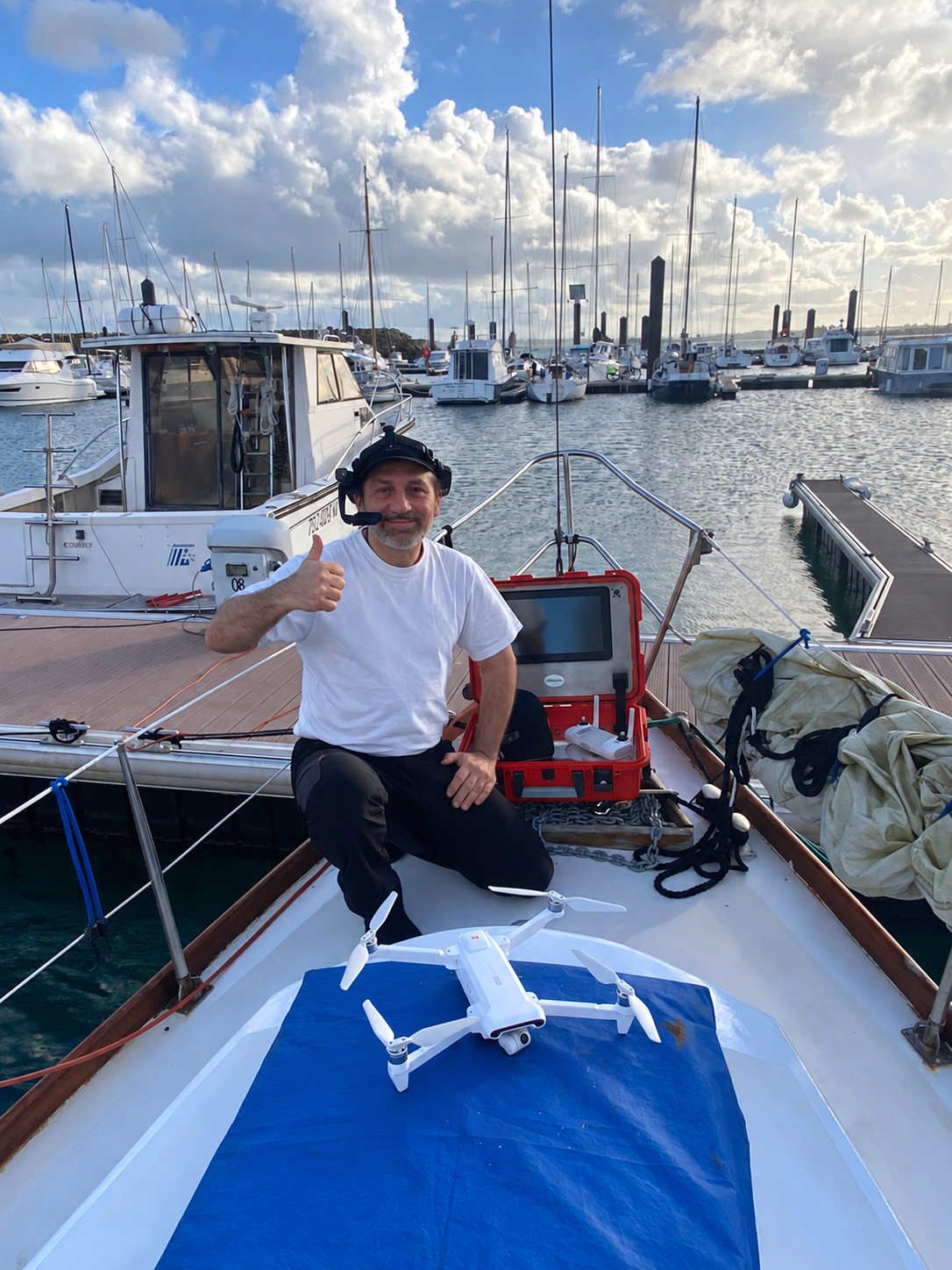
Testing on the moveDevelopment and testing: case, headset and drone in a maritime setting.
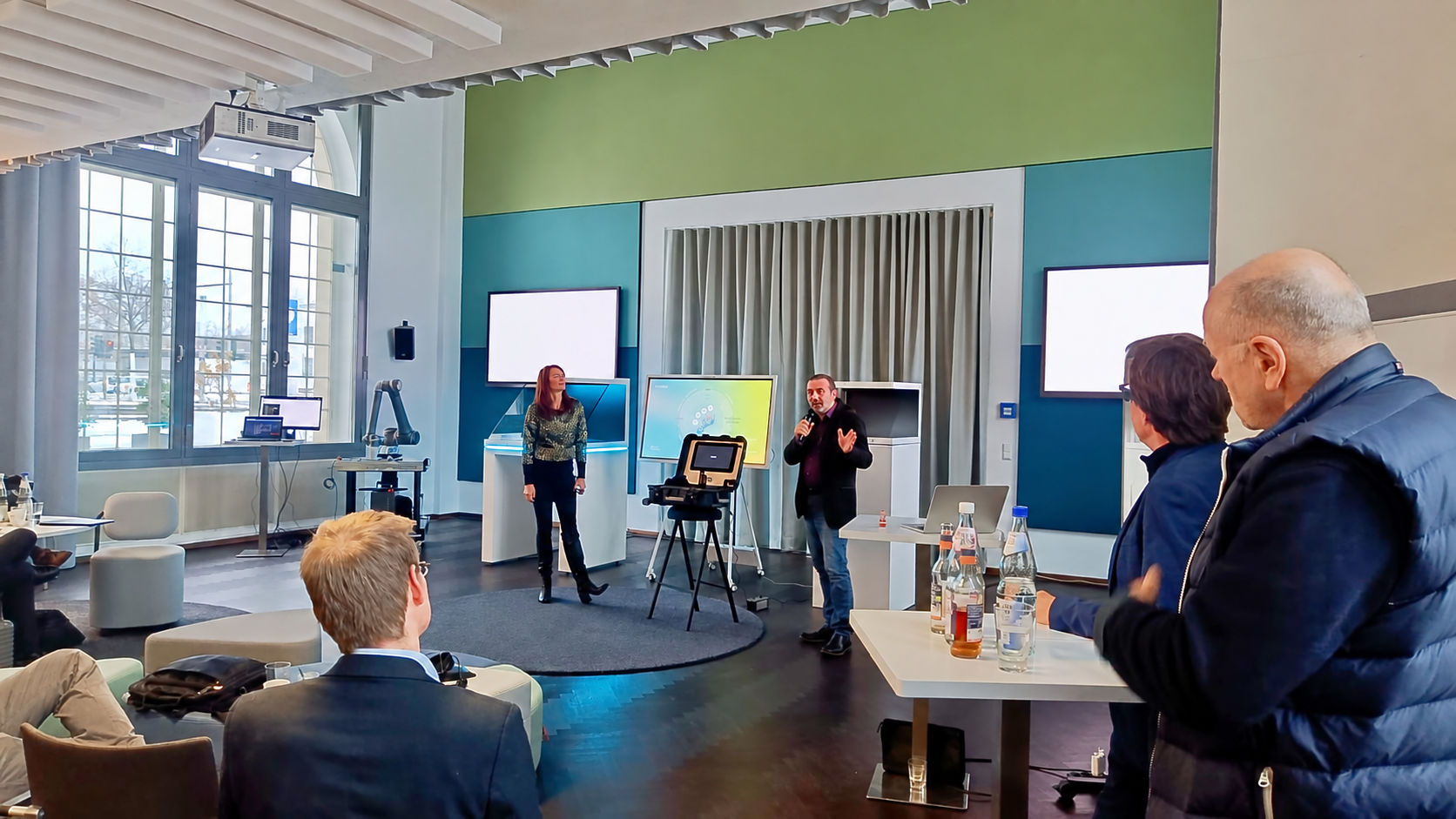
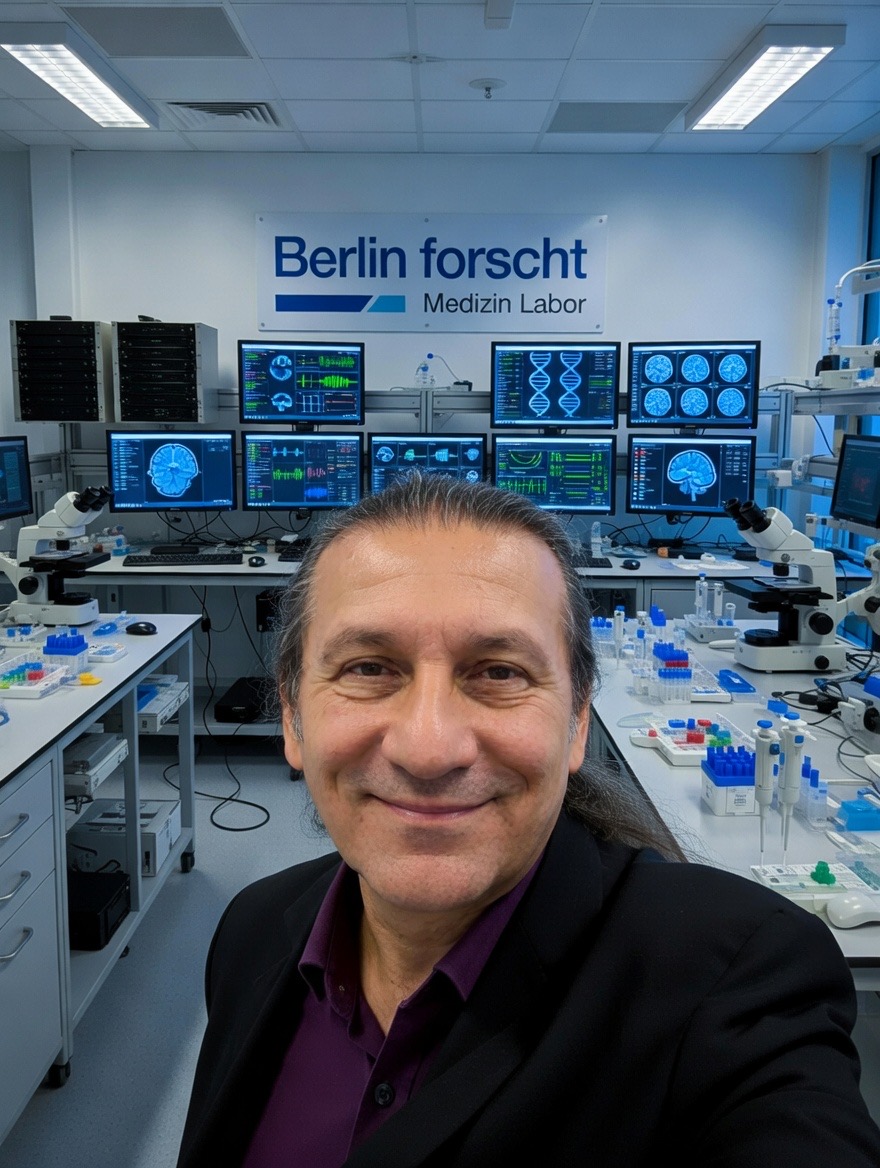
Sharing ideasDevelopment.The person behind the developmentProject image illustrating the research background. Visible institutions and brands are not presented as current SOULSKIPPER partners.
About the images
Historical photographs document earlier development, testing and presentations. They do not show current production versions of FABS AI or the NOMAD AI case.
05 / Investors & Partners
Shape the next steps together.
Interested in joining SOULSKIPPER as an investor or development partner? Our investor page outlines the development stage, planned business model and next steps for FABS AI. NOMAD AI remains a separate product line.
SOULSKIPPER Limited brings together FABS AI and NOMAD AI. They address different applications and share a history of sensing, AI and connected systems.
For project enquiries and discussions about partnerships or investment, contact us directly by email.